
Advanced Cargo Stabilization: Lowering Transit Damages in Interstate Malaysian Road Freight
Contents
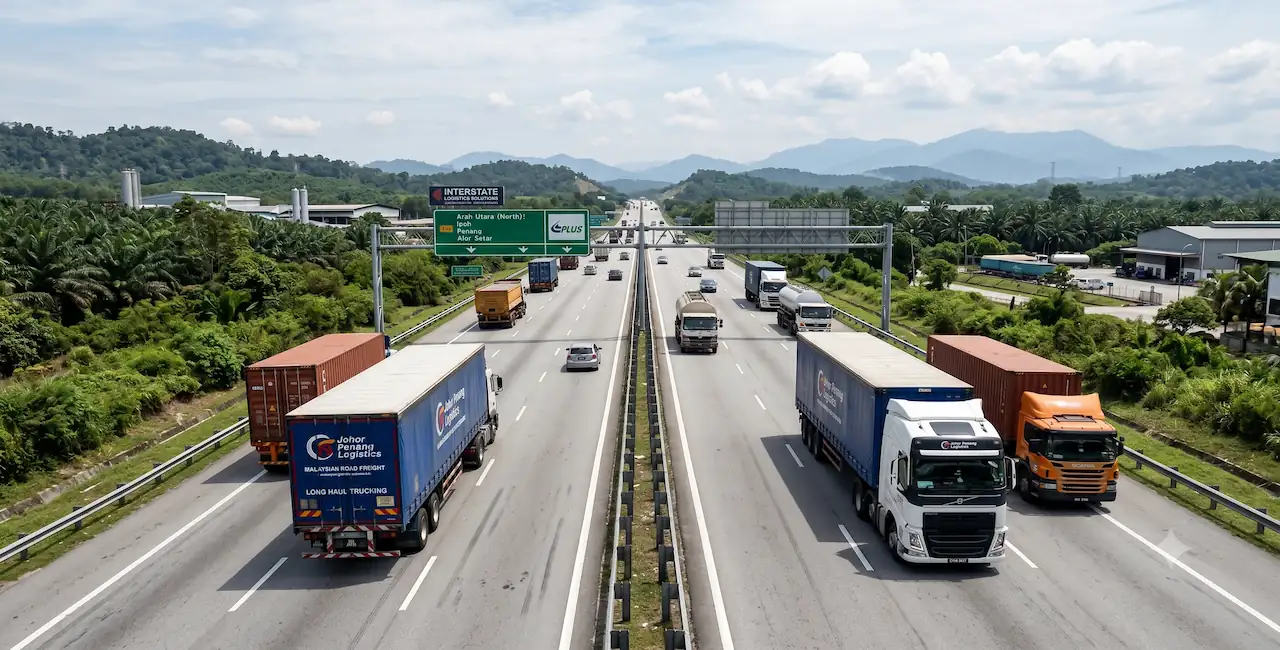
Interstate road freight forms the foundational backbone of Malaysia’s domestic commerce. Long-haul trucking routes running along the North-South Expressway (PLUS) connect the manufacturing powerhouse of Johor Bahru to the industrial hubs of the Klang Valley, extending all the way north to Penang’s high-tech electronics clusters. Millions of tons of fast-moving consumer goods (FMCG), sensitive electronic components, and heavy industrial supplies travel across this extensive overland network daily.
For logistics directors and fleet operations managers, executing interstate long-haul transport introduces a persistent operational challenge: mitigating transit cargo damage. Moving goods over hundreds of kilometers means exposing freight to structural vibrations, sudden braking forces, and unpredictable road conditions. When corporate profitability depends heavily on the perfect delivery of inventory, ensuring advanced cargo stabilization is no longer just a quality control target—it is a critical financial priority. To minimize cargo loss and protect product margins, leading Malaysian transport providers are abandoning outdated, unstandardized packaging systems in favor of certified pallet pooling frameworks.
The Costly Dynamic Forces of Long-Haul Trucking
Long-haul interstate transportation exposes structural weaknesses in unstandardized material handling methods. Many traditional logistics operators still rely on low-cost, uncertified wooden pallets or varied packing configurations to secure their trailers. While this approach seems economical during initial warehouse staging, it introduces significant liabilities once the truck enters the highway network.
During interstate transit, cargo is continuously subjected to dynamic physical forces, including lateral shifting during sharp turns, longitudinal stress from sudden braking, and constant vertical vibrations from uneven road surfaces. Low-grade, unstandardized wooden platforms vary wildly in strength, moisture levels, and dimensional accuracy. Under intense long-haul stress, these sub-standard platforms are highly prone to splitting, cracking, or structural buckling. A single collapsed pallet at the base of a trailer stack can cause the entire cargo layout to tilt and shift. This instability leads to crushed product packaging, ruptured primary seals, and massive cargo rejection penalties when the truck arrives at the client’s receiving dock.
Achieving Absolute Stability via Standardized Pallet Pooling
A certified, standardized pallet pooling system, such as the open-loop infrastructure managed by UPR Malaysia, directly resolves these road transit risks. By utilizing high-performance, injection-molded plastic pallets engineered with strict dimensional tolerances, transport providers can guarantee a superior level of structural stability inside their freight networks.
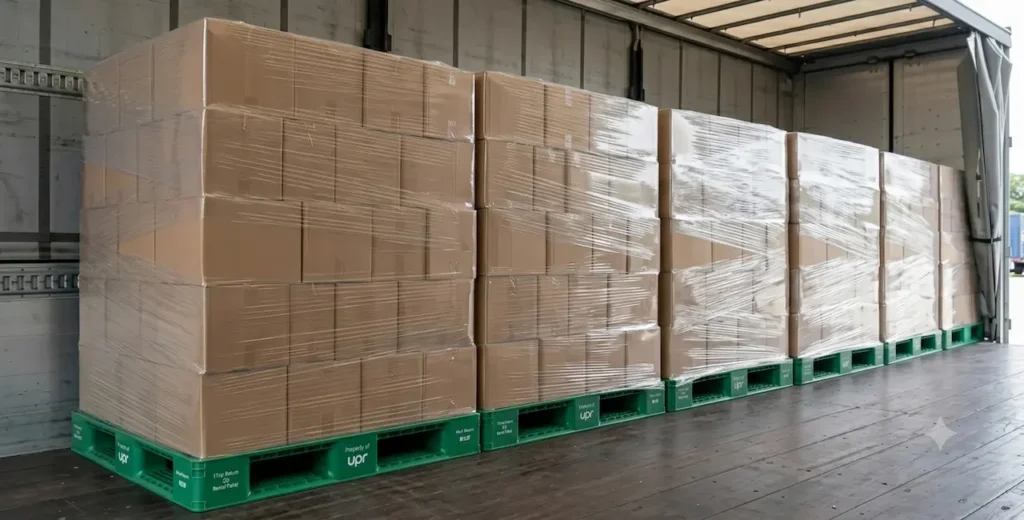
Standardized UPR assets feature mathematically uniform footprints and precise weight profiles. This uniformity allows logistics crews to construct perfectly square, interlocked product stacks that fit precisely into standard Malaysian curtain-sider trailers and container trucks.
Because our plastic platforms are manufactured from high-strength polymers using advanced molding techniques, they maintain complete structural rigidity under heavy dynamic loads. They do not bend, splinter, or lose surface traction, which prevents pallets from sliding against one another during highway transport. This consistent structural platform ensures that cargo units remain firmly anchored throughout long interstate journeys, completely eliminating the primary cause of transit shift and material damage.
Strategic Operational Benefits for Malaysian Long-Haul Logistics
Transitioning from private, fragmented equipment inventories toward a structured, rented pooling model delivers immediate competitive advantages:
Drastic Reduction in SLA Penalties
Minimizing transit product damage protects transport providers from expensive insurance claims and costly service level agreement (SLA) penalties from corporate retail clients.
Optimized Trailer Space Utilization
Standardized, uniform pallet footprints allow staging crews to mathematically optimize the interior trailer space, maximizing total product volume per trip and lowering carbon emissions per ton-kilometer.
Seamless Cross-Docking Efficiency
Utilizing identical high-performance assets across the entire transit loop allows interstate shipments to be cross-docked at regional transit points instantly without requiring manual cargo breakdown or double handling.
Securing the Flow of Commerce Across the Nation
In Malaysia’s highly competitive logistics sector, operational reliability is the ultimate differentiator. Transport businesses cannot control highway traffic or infrastructure wear, but they can completely control the structural integrity of the material handling platforms that protect their clients’ products.
Partnering with an experienced logistics asset specialist like UPR Malaysia ensures that your transport operations meet the highest standards of safety and efficiency. By standardizing your interstate road freight on high-durability, shared pooling assets, your organization can completely eliminate transit cargo waste, protect corporate profit margins, and deliver uncompromised quality from the factory floor to the final retail shelf.
Optimize Your Port Klang Maritime Container Logistics
Stop risking international cargo rejection and customs delays due to substandard wooden transport packaging.
Learn more about UPR Malaysia’s pallet rental services or visit our
Inquiry Page to scale your maritime export efficiency with our ISPM 15 exempt plastic pallet pooling workflows.
UPR Solution (Malaysia) Sdn. Bhd. > Columns > Logistics > Advanced Cargo Stabilization: Lowering Transit Damages in Interstate Malaysian Road Freight
 Contact us